13 Juni 2008

Contract marriages a ticket out of a small town

Contract marriages a ticket out of a small town

The Jakarta Post , Jakarta | Sat, 01/26/2008 2:12 AM | Life

SINGKAWANG, West Kalimantan (JP): With too much makeup for her tender years, Su Khim is about to embark on a momentous journey.

As a car pulled up in front of a three-star hotel in the center of Singkawang, she was one of the four people who alighted.

The others were two middle-aged men and a doltish looking young man.

They sat in the lobby, and the two older men began making a series of calls on their cellular phones. One of them came over to the young woman and told her: ""If the phone rings, you must answer yes.""

The man continued by telling her how she should answer the call in the Chinese dialect of Taiwan. Su Khim appeared timid, which irritated the man. ""How will you be able to go to Taiwan to see your mother-in-law if you can't even do such a simple thing?"" he barked.

Su Khim is only one of thousands of ethnic Chinese young women from Singkawang who choose to marry men from Taiwan in contract marriages.

Economic woes are the greatest push for the amoy, as Singkawang's ethnic Chinese women were once known, to seek a foreign bridegroom. Unlike many other Chinese-Indonesian communities, Singkawang is relatively poor. Most of the people are vegetable farmers or fishermen.

Unmarried men from Taiwan have realized it is easy to find a wife in the small town, which has led to brokers setting up business to help them in their search.

Language is no handicap. Though Singkawang residents speak Hakka as theirvernacular dialect, they quickly become fluent in the dialect of Taiwan.

From hunger

Su Khim, who is from Karimunting village, Sungai Raya subdistrict, said she only finished the sixth grade of elementary school two years ago, whichwould make her about 15 years old.

She helped her parents in farming but they lived in poor conditions. One day a distant male relative came to her family and asked Su Khim if she would be interested in going to Taiwan.

It was not for a job offer, but to become the wife of a young man.

Su Khim did not find the offer strange because several girls from her neighboring village had married men from Taiwan. She did not think long andhard about the matter, but decided it was a way to help her family.

She was told to have her photograph taken to be sent to Taiwan. She did not have to wait long because a month later there was a reply from her prospective husband.

He was the younger man in the lobby. Although the man suffers from polio and is not particularly attractive, Su Khim said she was still willing to go through with the plan ""because he's still young"".

She will try out the marriage arrangement by staying in Taiwan for a year.

Kenny Kumala of Singkawang's Ethnic Chinese Communication Forum (Foket) said the large number of Singkawang Chinese girls marrying men from Taiwan began to emerge in the 1970s.

He said it was better today because the man was required to meet his prospective wife before the marriage day. ""In the past they didn't know whotheir husbands before they went to Taiwan,"" she said.

Kenny did not deny the arrangement held risks for the women. ""I've received information from a non-governmental organization in Taiwan that there are 10,000 girls from Singkawang whose status is unclear.""

He also did not dispute that many girls also married good spouses.

""It is they who send money to their families in Singkawang each month,"" Kenny added.

Tjang Fo Hon, the head of a monastery in Singkawang, said men from Taiwanchose women from Singkawang as their wives because they were considered patient and not materialistic.

He said most of the men found it difficult to find partners in their own country, sometimes because of their looks but mostly because they were ""notestablished"".

Marriage to Singkawang women is a bargain for them. They only pay for their flights to Singkawang and a small dowry to their new in-laws. It's relatively inexpensive due to the strength of the Taiwan dollar to the rupiah.

The marriages are most often carried out at the public records' office. However, the men cannot bring their new wives to Taiwan until the women have changed their citizenship, which involves submitting applications to the Taiwanese Chamber of Commerce and Industry in Jakarta.

""The process can take three months,"" Tjang Fo Hon added. If the applications are approved, the wives can follow their husbands.

In addition to send money back to their parents every month, the women usually return home for Chinese New Year.

Aloysius Kilim, regional legislature for Bengkawang regency, said there was no administrative way to prevent the marriages, despite protests that some of the women are underage.

""Anyhow their families become prosperous because their children have married in Taiwan,"" he said.

For some women and their families, it's the only way for them to create abetter life. (Erma S. Ranik)

Sentarum, exotic wet swampy lake in West Kalimantan

Sentarum, exotic wet swampy lake in West Kalimantan

The Jakarta Post , Jakarta | Sat, 01/26/2008 2:55 AM | Life

By Erma S. Ranik

PONTIANAK, West Kalimantan (JP): Tired with the usual holiday atmosphere? If you like ecotourism, why not visit the gorgeous Sentarum Lake National Park?

Located in Kapuas Hulu district, some 700 km from Pontianak, this 132,000 hectares park has a lot to offer.

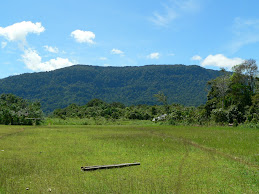
Sentarum is unique in that some 35,000 hectares of the lake is 7 meters to 15 meters in depth with the remainder a swampy forest with tree heights measuring 20 meters to 25 meters.

The tropical rain forest is much thicker than any other forests elsewhere in the province. Sentarum is the only primary fresh water swampy forest area in Kalimantan with such tall trees.

The trees adapt to the high level water levels that flood the area annually. Although the annual flood from December to March rises as much as 7 meters, the trees manage to survive.

When the dry season comes, usually in July or August, the water level of River Kapuas goes down. The swamp and part of the lake dries up.

""The land will seem just like a meadow,"" said Hariyanto, a local resident.

This meadow, he added, is prone to fire. ""There was a big fire in Sentarum back in the 1997 dry season,"" he said.

Sentarum Lake plays an important role in maintaining the ecosystem of West Kalimantan. It can absorb some 20 percent of the overflowing water from River Kapuas, averting inundation in the river basin areas. During the wet season, Sentarum Lake can collect rainwater and supply 50 percent of it to River Kapuas during the dry season. If a change of ecosystem takes place in Sentarum, the entire West Kalimantan environment will be endangered.

Research conducted by Kleper shows that peat surrounds the lake and the land is lacking in minerals and the water in the lake becomes tea-brown owing to the presence of tannin in great amounts.

Sentarum Lake area is rich in fauna. The latest research shows that there are 200 species of fish, such as belida (chitala lopis), toman (channa micropeltes), betutuk (oxyeleotris marmorata) and jelawat (leptobarbus hevenii).

There are also fancy fish like ulanguli (botia macranthus) and the expensive rare species, arwana (scleropages formosus). Unfortunately, Arwana is difficult to find in Sentarum Lake now.

The lake area is also home to proboscis monkeys (sasalis larvatus), orangutans (pongo pygmaeus), sinyulong crocodiles (tomistoma schlegelii), estuary crocodiles (crocodylus prosus) and swampy forest egrets (ciconia stromi), among others.

The area is rich in tembesu wood (fragrea fragrans) and kawi (shorea balngeran) as well as 207 other varieties of plants.

The uniqueness of this lake area prompted the government to decide in 1982 that Sentarum Lake area was an animal reserve area. It was declared as a national park in 1999.

Untapped potential

Sentarum Lake National Park has vast tourism potential. Unfortunately, this potential has yet to be tapped. As the area has been earmarked as a national park, the provincial administration is unwilling to develop it, considering the area to be under the central government's authority.

""There seems to be a tug-of-war between the interests of the central government and those of the regional administration,"" said Sumiati, head of the sub-section for technical guidance of West Kalimantan's Kapuas Soil Conservation and Land Rehabilitation. .

In fact, Sentarum has a lot to offer: the beauty of its flora and fauna and its unique culture.

You can see enggang gading, a rare bird now the mascot of West Kalimantan, flying and perching in the trees. Then there are white egrets looking for fish. You can hear the shouting of orangutans and proboscis monkeys hanging from tree branches.

Visitors can enjoy delicious fresh water fish. You can buy them from the locals or you can catch them yourself.

Do you like swimming? You can spend as much time as you want swimming in the lake. Although the water is brown in color, it is clean. But be careful because in some parts of the lake there are still swamp crocodiles.

Then you can go to the cave at Semujan Hill where you can see seagull nests. Black seagull nests are found in this limestone hill. A kilogram of the nests may bring a price of Rp 2.5 million to Rp 4 million and the nests can be harvested every 2 months.

As seagull nests are valuable, the owners of the nests usually guard the cave during harvest time. If you like rock climbing, you may take part in the harvest.

It is also interesting to observe the culture of the locals, who are from sub-tribes of Dayak Iban, Dayak Embaloh, Dayak Kantuk and Malay.

The Malays live in the river basin areas. They are Muslim and their houses float on the river. To connect one house with another there is a wooden bridge. For many generations, the Malays have survived on the fish of Sentarum Lake. They usually net the fish or breed them in keramba.

""We never till the land,"" said Hariyanto, a resident of Nanga Leboyan, Selimbau sub-district. He said that they bought rice and vegetables from the Dayak people.

There is a saying: ""There are no vegetables if there are no Iban people,"" he added with a smile.

The Malays also traditionally collect honey from wild bees (apis dorsata) found in trees around the lake. If you come to this area in October or early November or between mid-January and end of February, you can enjoy the honey along with the locals.

The Dayak people are usually Christian and live in hilly areas in their traditional communal long houses. These houses may be dozens of years to hundreds of years old. Within the lake area there are at least eight long houses.

In their long houses, the Dayak people lead their social and cultural lives. If you are lucky and come during the Gawai (festivity) season, they will be pleased to ask you to dance to the Sapek music, the traditional music of the Ibans. You can then enjoy tuak, a liquor unique to the Dayak people.

If your time is plenty, you can spend a few days in a long house and observe how the traditional cloth of the Dayak Iban is made. The cloth is woven by the women and is colored with plant material. Then traditional patterns are drawn on the cloth.

Remember that you may not be able to see one of these traditional cloths of the Dayak Iban because each one takes about a year to make. That's why it is expensive and may cost hundreds of thousands of rupiah. ""But the quality is very good,"" said Valentinus Hery, a Dayak Iban.

Interestingly, in an outer region of the lake there is a small island called Melayu Island. The locals believe that if you want to find out whether your wishes can come true, you must climb the hill and pray before the grave of a haj at the top of the hill. ""Usually any wishes, including finding your life match, can be granted,"" said Iwan, a young Malay man.

Once you finish sailing round the lake, you can learn to steer a boat with an outboard engine. Locals are usually willing to show you how to do this. Who knows, after some time you may be able to steer the boat adeptly. Be careful, though, because during the wet season, the weather on the lake area capricious. Strong winds followed by a downpour may occur at any time. If caught in such a storm, it would be prudent to take your boat to the bank and take refuge among the trees around the lake.

Then you can feast your eyes on the panorama of Sentarum. You can climb Bukit Terkenang. This is the highest hill in the area. From the tower at the top you can see the lake area in its entirety. There used to be a research center project on this hill -- a joint undertaking between the Indonesian and British governments. Unfortunately, the project, which was not completed, is in great neglect. There are lodging places for visitors but the facilities are not proper.

At night it is an almost spiritual experience to sit quietly in the middle of the lake and enjoy its beauty. The magnificence of the star-studded night sky and the serenity engendered by the night sounds of nature will make you feel compelled to return to this place, again and again.

The natural beauty of Lake Sentarum is known to few people because it has never been promoted as a tourist destination. Visitors are usually people who have visited before with a longing to return and enjoy its unusual beauty. If you are a nature lover who does not require coddling, then this could be the adventure you have been looking for.

How to get there

The trip to the lake is not difficult, but it is arduous. You can take a bus from Pontianak to Semitau sub-district in 15 hours. From there proceed to Lanjak via speedboat for another two hours.

Alternatively, you can fly from Supadio airport in Pontianak to Sintang district, which takes about an hour. Then you can either take a bus to Semitau for three hours or take a speedboat to Selimbau sub-district in five hours.

If you take a speedboat, the cost will be higher but the advantage is that you can directly reach the lake. If you take a bus, you will spend less money but you will still have to take a speedboat to reach Lanjak.

Arriving at Sentarum Lake, you can hire a boat with an outboard engine to cruise around the lake, savoring its beauty. Tekenang natural resources conservation unit can provide lodging.

To explore the entire area by boat would take at least a week, but you would certainly not regret the time. The vistas, flora and fauna will intrigue you and provide you with memories that will undoubtedly make you return one day.

Photos by West Kalimantan children bring reconciliation

Photos by West Kalimantan children bring reconciliation

The Jakarta Post , Jakarta | Sat, 01/26/2008 2:45 AM | Life

By Erma S. Ranik

PONTIANAK, West Kalimantan (JP): Sixteen-year-old Agus' eyes gleamed whenhe saw the photograph before him. ""That is the rice field near my house,"" he said. His eyes were glued to the photographs taken by Desy Anggraini, 16, who hails from Sinam village in Pemangkat subdistrict, Sambas regency.

Agus is one of thousands of children who fled their homes with their parents following the riot that rocked Sambas in March 1999. He has lived in a haj dormitory in Pontianak for over a year now. It is not possible forhim to return to Sinam because the residents of the Malay ethnic group, whooccupy most of Sambas, still object to the return of the Madurese residents.

Agus was able to gratify his longing for his home village when he saw thephotographs on display at an exhibition of children photography at the State Museum in Pontianak from Nov. 20 to Nov. 22. Agus was able to name the spots and places captured in the photographs on display.

Agus' comment was just one of many reactions to the photographs during a workshop on photography held for the children of West Kalimantan. This exhibition was the fruit of a collaboration between Child's Eye, a network of non-governmental organizations in West Kalimantan and the Forum of Volunteers from West Kalimantan, with support from the British Council.

Sixty children of Malay, Dayak, Madurese and Chinese ethnic/racial backgrounds took part in the exhibition. Most of them were from socially marginalized classes in Pontianak, Nyarumkop and Pemangkat: the children ofbus conductor assistants, fishermen and basketmakers, school dropouts and children from refugee camps.

Jonathan Perugia of Child's Eye said the most important part of the program was helping the children of West Kalimantan explain what took placein their daily lives through photography.

""Many people may know nothing about what the daily life of a child is like,"" he said.

And sadly, many children lead desperate lives. They receive no education,are subject and witness to horrible violence or are compelled to work to survive.

With just a pocket camera the children were given ample opportunity to make use of photography as an instrument with which they could talk about their daily lives.

""You feel something different when you look at photographs taken by children and those taken by professional photographers,"" said Perugia, an Associated Press free-lance photographer.

Professional photographers may come up with artistically fine photographs, but they may not have a strong feeling for what they capture with their cameras. ""They are obviously different from the children in their own environment.""

This explains why the children taking part in the program were able to capture their daily activities in their entirety.

Jemi, 15, a Malay, fishes for a living. So he has chosen as his subject the lives of fishermen's children in Pemangkat, capturing their activities from collecting fish to bathing in the river.

In this exhibition, the children were allowed complete freedom to select which of their photos they thought were worth displaying.

The children of Nyarumkop have also captured the activities they know best. They photographed life in a Dayak village. And Wijayanto, 15, captured with her photos the pulse of life among the ethnic Chinese in Singkawang.

Meanwhile, children from a refugee camp tell in their photos what their lives in the camp are like: a limited supply of clean water, small huts andscabies, which many children in the camp suffer from.

With the special spirit of children, they also recorded in their photos the riot that broke out in Pontianak between Oct. 25 and Oct. 27, 2000. Bekri, 14, for example, came up with a photograph showing the desire for a peaceful Pontianak that children have.

A child is squatting, holding a small banner that reads: ""We love peace/ethnic groups/racial groups/religion."" The caption below the photograph reads as follows: ""This banner is held by a child refugee who loves peace. His name is Adam, aged 10, and he earns a living as a scavenger.""

Look at the photographs by Anissa, 15, a Malay girl from Pontianak. She took a picture of a Madurese and a Malay joining hands under a banner aboutthe love for peace. The photo was taken in Kampung Dalam, where the riot inPontianak began.

Anissa said the photo was very important because it depicted the unity between the Madurese and the Malay. Her caption for this photo is: ""Happy and Peaceful.""

""I took this picture in the middle of a riot. The leaders of the Madureseand the Malay suggested that everybody make a banner with the inscription ""Love peace"" to ensure the riot would not spread,"" she said.

Meanwhile, Raidatul Ulum, a coordinator of the event, said the exhibitionalso was held in observance of International Child's Rights Convention Day,which is observed every Nov. 20.

It also is aimed at making more people aware of the plight of children inWest Kalimantan. ""Children are always the victims in the conflicts that break out in West Kalimantan.""

Therefore, this exhibition was held not only in Pontianak, but also in Singkawang from Nov. 24 to Nov. 26. ""The aim is to make more people in WestKalimantan aware of the plight of the children of West Kalimantan,"" he stressed.

To Muhamad, 25, a visitor to the exhibition, this event could be construed as a reconciliation of sorts in West Kalimantan. ""The photographsput on display are those taken by children of different ethnic groups in West Kalimantan.""

He said that this was a good step forward given that conflicts often occur in the province. ""Hopefully through this exhibition the children willbe able to remind adults of the significance of being different,"" he stressed.

Differences, Muhamad said, are no reason for clashes and conflict.

The writer is a journalist for KALIMANTAN Review and a member of the Alliance of Independent Journalists, West Kalimantan bureau